
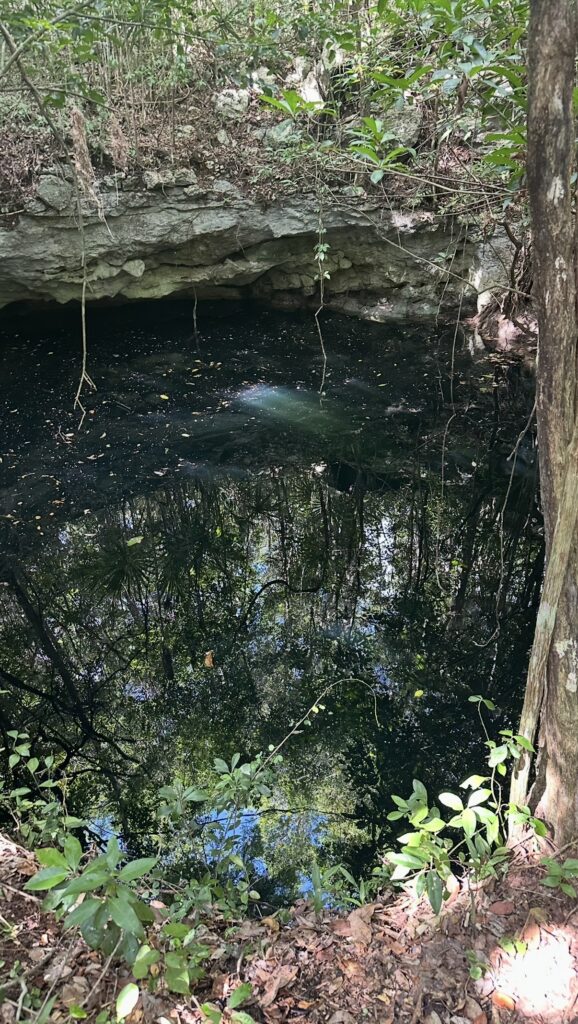
IF YOU ARE A FULL CAVE DIVER HERE IN THE YUCATAN…
sooner or later you’ll find yourself walking through the jungle looking for something that isn’t on the map yet.
A new cenote. An unexplored cave entrance. Or just a hole in the ground that might turn into your next big discovery.
Finding new cenotes can take a few hours or an entire day. It’s exciting, unpredictable, and definitely not something you should do without preparation.
No trails, little to no cell service, and plenty of ways to lose your sense of direction.
SO HERE’S HOW I PREPARE FOR A DAY OF HUNTING CENOTES IN THE JUNGLE.
1. KNOW WHERE YOU’RE GOING
(at least roughly)
Before heading out, we study the area using maps, existing cave systems, previous exploration data, and possible access roads.
We choose a starting point, plan our route, and most importantly, let someone know where we’re going and when we expect to return.
Cell service is practically nonexistent in many parts of the jungle. If something goes wrong, having someone outside the team who knows your plans can make all the difference.
Of course, plans tend to change once you’re out there. Roads disappear, trails lead nowhere, and what looked accessible on a map suddenly isn’t.
That’s part of the adventure. But having a plan is still better than having none.
2. DRESS LIKE THE JUNGLE IS PERSONALLY ANGRY WITH YOU

The Yucatán jungle is hot, humid, and full of things that bite, sting, scratch, or get caught in your clothes.
During summer, temperatures can reach 38°C (100°F), and the humidity certainly doesn’t help.
My advice? Cover up.
Long sleeves, long pants tucked into your socks, and lightweight, quick-drying fabrics are your best friends.
Choose clothing that can handle some abuse. Between sharp limestone, thick vegetation, and crawling around potential cave entrances, your outfit will take a beating. Avoid heavy cotton and fabrics thin enough for mosquitoes to bite through.
I personally prefer technical outdoor clothing with UPF protection. And trust me, a few accessible pockets make life much easier.
DO NOT UNDERESTIMATE YOUR SHOES
Uneven terrain, slippery rocks, roots, and vines are everywhere. Good grip is essential.
I’ve recently switched to trail-running shoes and really like them, especially models with quick-lacing systems. No loose laces getting caught in vegetation every few minutes.
A cap, buff, or lightweight scarf also helps protect your head and neck from branches. And if you have long hair, tie it up. Getting your hair tangled in a vine is not exactly the kind of jungle adventure you’re looking for.
Finally, insect repellent. Lots of it.
Mosquitoes and ticks aren’t just annoying; they can transmit diseases. Choose a proven repellent and reapply it according to the instructions.
3. YOUR BACKPACK: BRING WHAT YOU NEED, NOT EVERYTHING YOU OWN
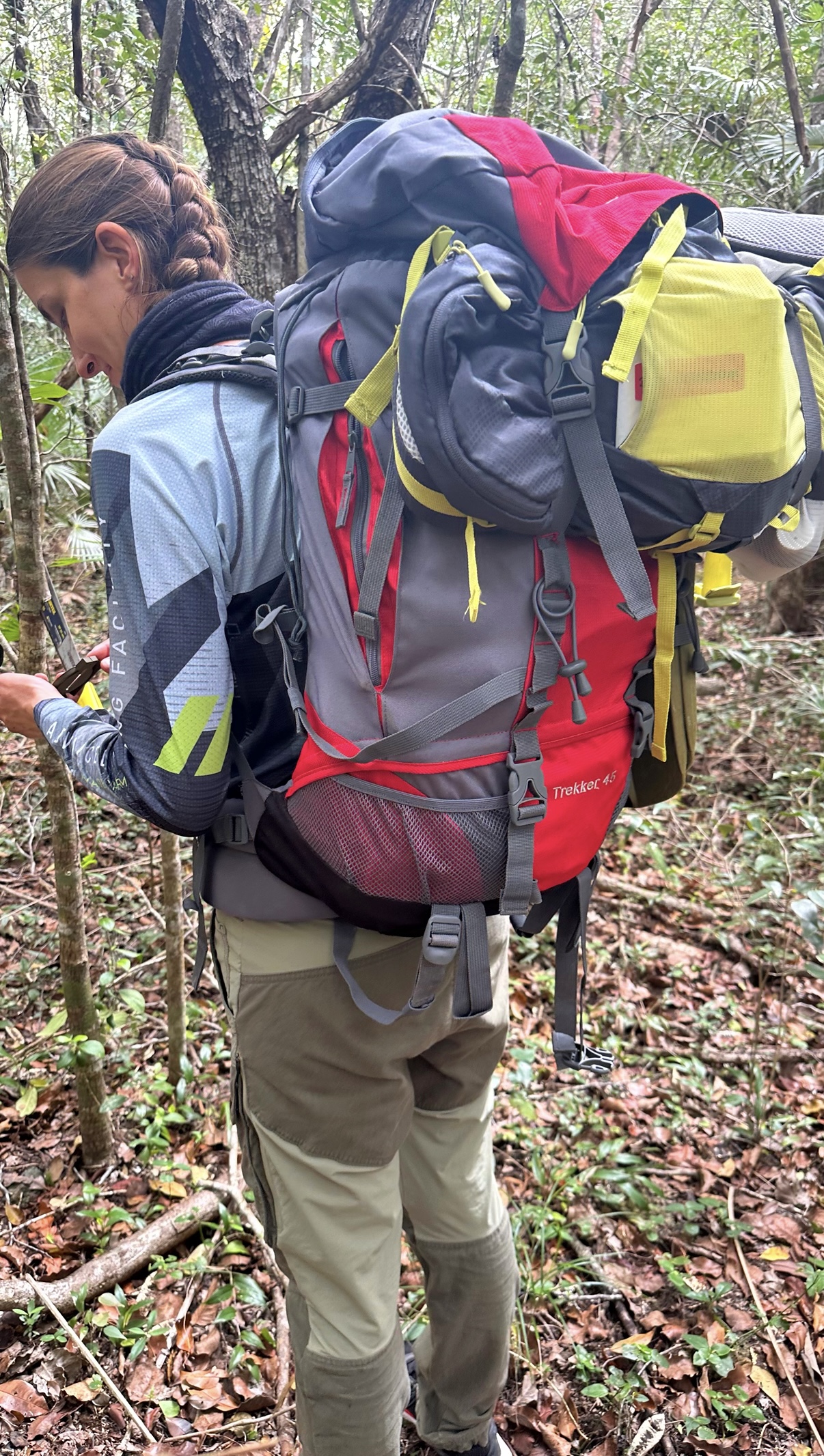
You’ll be carrying your backpack for hours, often through dense vegetation with no actual trail.
Choose something comfortable, compact, and preferably water-resistant.
What you carry depends on the mission. A scouting trip is very different from returning to an already discovered cenote with ropes, tanks, and SRT equipment.
For a regular exploration day, here’s what I bring:
-
Insect repellent: You’ll be grateful you packed it.
-
First-aid kit: Bandages, antiseptic, gloves, eye irrigation, antihistamines, and basic medical supplies. I use a Dive First Aid kit, but you can build your own.
-
Wet wipes: After hours of touching rocks, trees, and everything in between, you’ll appreciate clean hands before eating.
-
Snacks: Nuts, fruit, or energy bars. Bring something that survives the heat.
-
Water and electrolytes: I carry at least two litres, plus extra water in the truck. Depending on the conditions and duration, you may need considerably more.
-
Swimsuit, mask, towel, and underwater light: Because finding a promising cenote and not being able to take a closer look would be frustrating.
-
Navigation equipment: Offline maps, GPS, a compass, and a power bank. Never rely on cell reception or a single electronic device.
-
Machete: Sometimes the only way forward is to clear a path, where access and local rules allow it.
And one rule that should never need explaining: everything you bring into the jungle comes back out with you.
No bottles, wrappers, or other trash left behind.
A quick look from the surface can help us assess a newly found cenote, but entering an unknown underwater cave requires proper planning, equipment, and a qualified exploration team.
4. THE TRUCK IS YOUR BACKUP PLAN
When you’re exploring far from the nearest town, your vehicle becomes more than just transportation.
It’s where the extra supplies live.
I always keep additional water, snacks, medical equipment, basic tools, a spare tire, and a tire-inflation kit.
A clean T-shirt, towel, and blanket are also worth having.
And if you want to make your future self happy? Leave some cold drinks in a cooler.
Personally, I also like having a Yeti full of coffee waiting for me.
After several hours sweating through the jungle, that first sip is hard to beat.
Sometimes, instead of heading straight home, we stop at the dive shop to download GPS data, compare notes, and discuss what we found.
It’s one of my favorite parts of exploration. A hole in the ground that looked promising in the morning might become the starting point for our next project.
5. BACK HOME? YOU’RE NOT QUITE FINISHED
After a long day in the jungle, the temptation is to shower and collapse somewhere comfortable.
Almost.
First, check yourself thoroughly for ticks, including areas you can’t easily see. If possible, ask someone to help.
Throw your clothes in the wash, clean your equipment, and drink plenty of water.
Hours of walking, climbing, sweating, and pushing through vegetation take more energy than you might realize.
Then you can finally rest.
SO, READY TO GO CENOTE HUNTING?
There’s something special about walking into the jungle without knowing exactly what you’ll find.
Sometimes it’s a dead end. Sometimes it’s a hole full of leaves. And sometimes, it’s the entrance to a cave nobody has explored before.
That’s what keeps us coming back.
The excitement of discovering something new makes the heat, mosquitoes, scratches, and endless walking worth it.
Just remember: preparation matters as much as curiosity.
Respect the jungle, know your limits, leave nothing behind, and enjoy the adventure.
Happy hunting!