
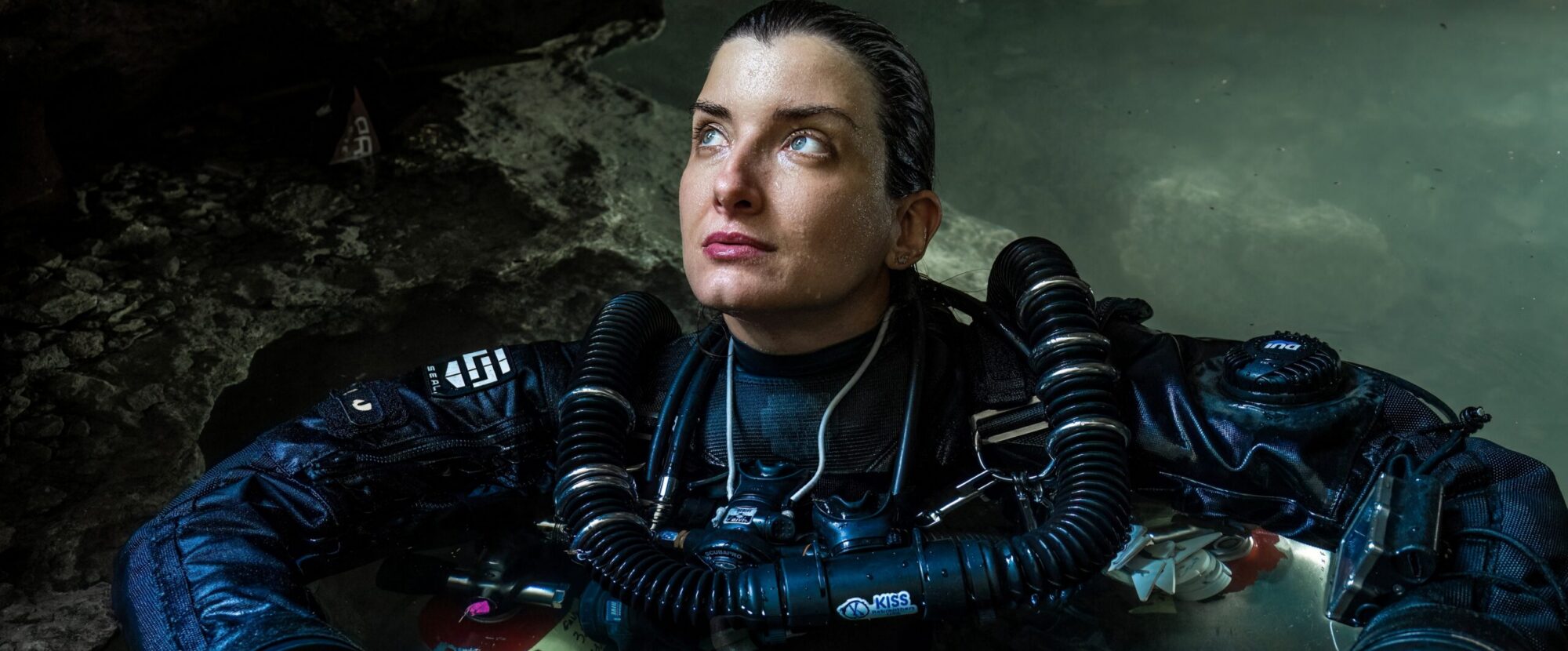
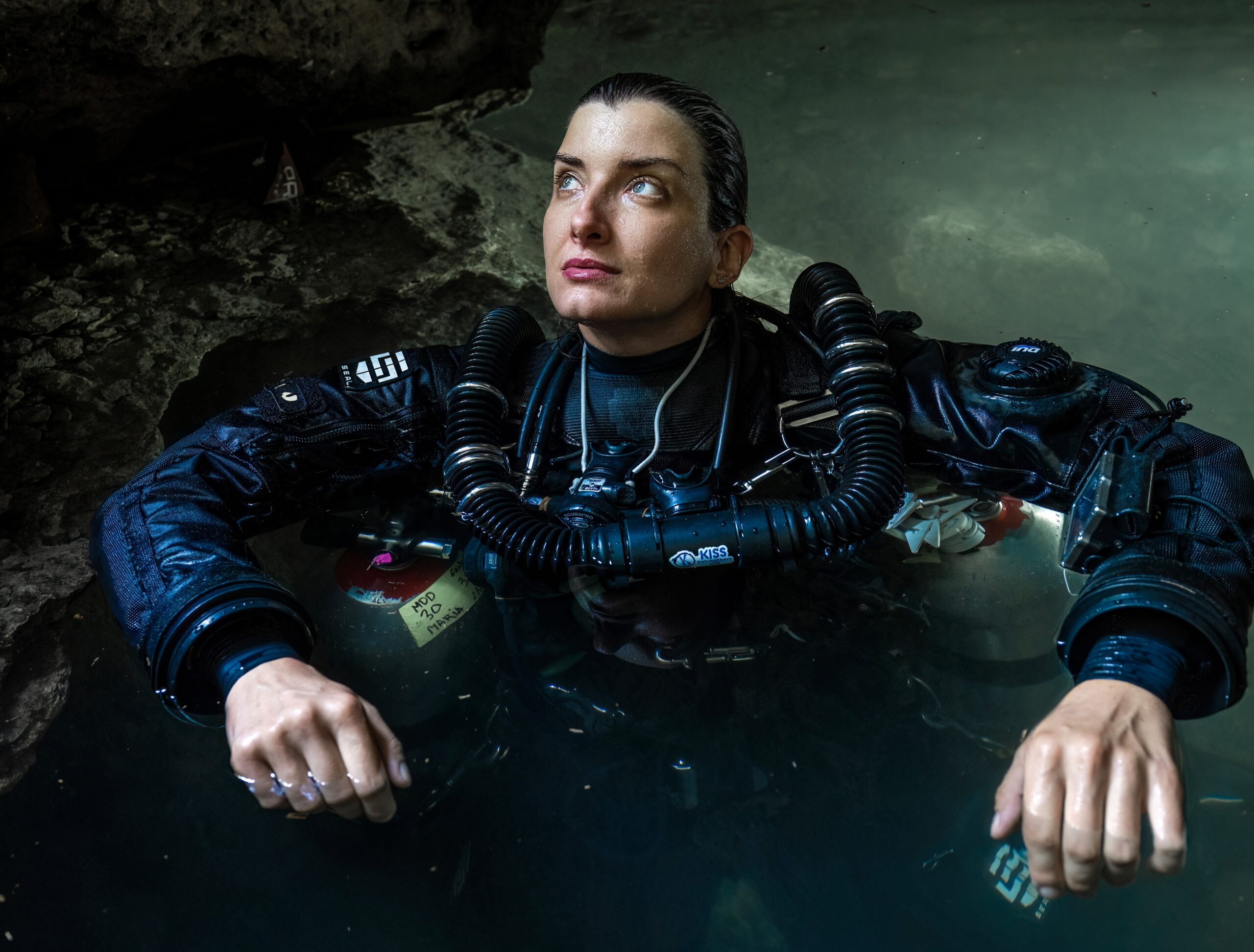
Communication is one of the most important skills we use every day.
It allows us to share information, solve problems, avoid misunderstandings, and work together toward a common goal. As human beings, we are fortunate to have a highly effective communication tool at our disposal: speech.
In cave diving, however, that tool disappears the moment we submerge.
UNDERWATER, WE LOSE THE ABILITY
TO TALK.
Obvious as it sounds, many divers underestimate the impact of travel, new foods, and subtle hygiene lapses. Fresh juices, spicy street tacos, or a salad washed in unfiltered water may be harmless to locals—but they can throw your gut into chaos. We’ve seen divers call dives or bolt from the cave because of a “funny stomach.” Others miss full days of diving.
To minimize the risk:
- – Give yourself time to acclimate after long flights or time zone changes.
- – Wash your hands often (yes, really).
- – Stay well-hydrated—add electrolytes, especially in hot climates.
- – Stick to familiar, gentle foods before diving; save culinary adventures for non-dive days.
- – Avoid heavy, greasy meals or excessive fiber—feeling bloated underwater is no fun.
Finish big meals at least an hour before the dive. Light, easy-to-digest snacks like a banana are great just before or after diving.
DIVING = SPORT. FUEL LIKE AN ATHLETE.
Obvious as it sounds, many divers underestimate the impact of travel, new foods, and subtle hygiene lapses. Fresh juices, spicy street tacos, or a salad washed in unfiltered water may be harmless to locals—but they can throw your gut into chaos. We’ve seen divers call dives or bolt from the cave because of a “funny stomach.” Others miss full days of diving.
To minimize the risk:
- – Give yourself time to acclimate after long flights or time zone changes.
- – Wash your hands often (yes, really).
- – Stay well-hydrated—add electrolytes, especially in hot climates.
- – Stick to familiar, gentle foods before diving; save culinary adventures for non-dive days.
- – Avoid heavy, greasy meals or excessive fiber—feeling bloated underwater is no fun.
Finish big meals at least an hour before the dive. Light, easy-to-digest snacks like a banana are great just before or after diving.
MACRONUTRIMENTS MATTER
Carbohydrates
Your body’s main fuel source. Carbs break into glucose and glycogen, feeding your brain and muscles.
Good sources: whole grains, fruit, vegetables, pulses, oats.
Watch out for: excessive sugar or high-fiber foods before a dive—they can cause bloating or sugar crashes mid-dive.
Protein
Essential for muscle recovery, repair, and long-term health.
Great options: fish, lean meat, eggs, dairy, tofu, lentils.
Eat protein with your carbs pre-dive to stay satisfied longer, and definitely include some after the dive for recovery.
Fat
Fats protect organs, aid vitamin absorption (A, D, E, K), and provide long-lasting energy.
Best fats: nuts, avocados, oily fish, seeds, and plant oils.
Avoid excessive saturated fats (butter, fatty meats), as they may affect circulation.
ANTIOXIDENTS & MICRONUTRIMENTS: Your Cellular Armor
Diving, like other aerobic activities, increases oxidative stress. That’s a normal part of metabolism, but if unbalanced, it can lead to cellular damage.
Fight back with:
- – Vitamin-rich foods (A, C, E)
- – Dark chocolate, coffee (yes!), carrots, berries, beetroot
Anti-inflammatory options like ginger, tuna, salmon, tomatoes
Micronutrients—vitamins, minerals, electrolytes—are essential for proper enzyme function and metabolism. A well-rounded diet usually covers your needs, but if you’re unsure, a blood test can help guide supplementation.
HYDRATION: NON-NEGOTIABLE!
Water supports everything from muscle function to thermoregulation. In Mexico, bottled water lacks electrolytes, and we lose a ton of fluids through heat, sweat, and long dive times.
Aim for:
– 3+ liters of water per day
- – Electrolyte supplements (especially during active diving days)
EAT LIKE YOU WANT TO KEEP DIVING
A solid diet supports your performance and extends your diving career. Avoiding alcohol, smoking, and highly processed foods goes a long way. Whether you’re an occasional diver or working full-time in the water, proper nutrition makes diving safer, easier, and more enjoyable.
You don’t have to be perfect: just mindful.
Because let’s be honest: no one wants to miss a dream dive because they ate something they shouldn’t have..